The city, told through its places

Places and Landmarks

Discover Plovdiv through the streets, hills, ancient monuments and living neighbourhoods that shape the city. Choose a walk or begin with the map.

All routes →

Map of the places

Explore the city on the map. Choose a category, search for a place or follow a ready-made route.

More filters

Visible: 24 of 151 places

The Old Town (Old Plovdiv)
Faces&&Places · CC BY 2.0

Revival

The Old Town (Old Plovdiv)

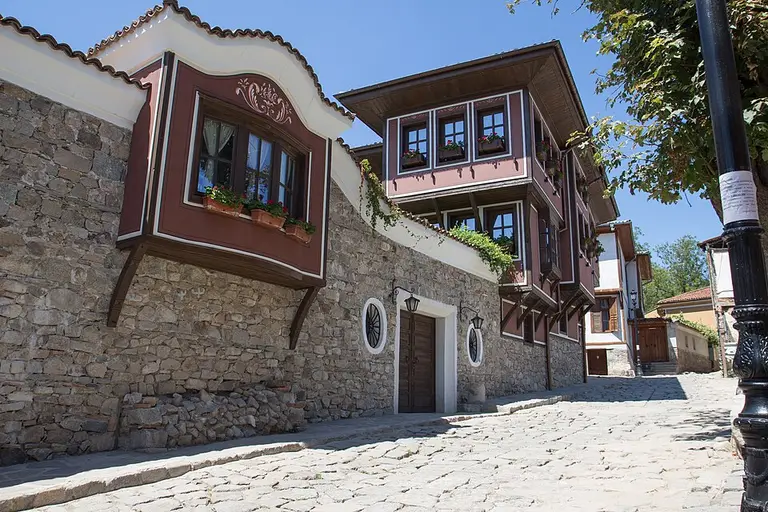
An architectural-historical reserve on Nebet, Dzhambaz and Taksim Tepe, famous for its 19th-c. Revival houses — such as the Kuyumdzhioglu House (1847, now the Ethnographic Museum). It has been on UNESCO's tentative list since 2004.

National Revival, 19th c. Open
Ancient Theatre
Edal Anton Lefterov · CC BY-SA 3.0

Roman

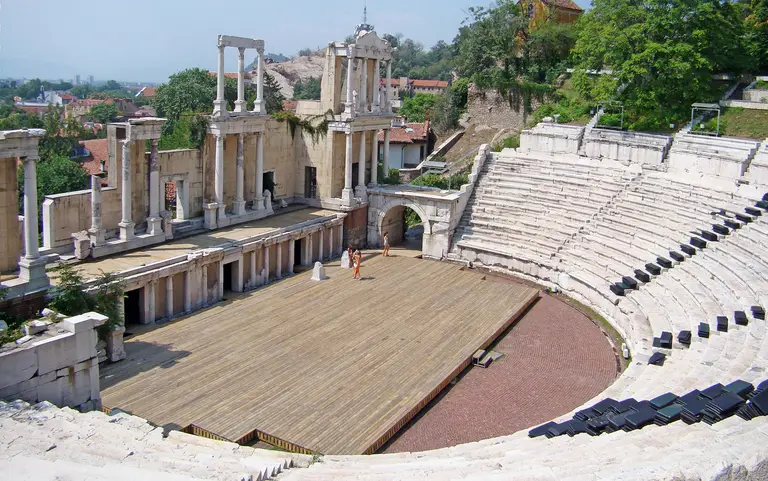
Ancient Theatre

Probably the best-known ancient monument in Bulgaria, built in the 90s of the 1st century AD under Emperor Domitian. Set in the saddle between two of the three hills, it seated about 7,000 on two tiers of 14 rows each. Studied and restored between 1968 and 1984, it is among the best-preserved Roman theatres in the world and still hosts the Opera Open and other festivals.

Roman period, late 1st c. Open

Nebet Tepe
VladislavNedelev · CC BY-SA 3.0

Thracian

Nebet Tepe

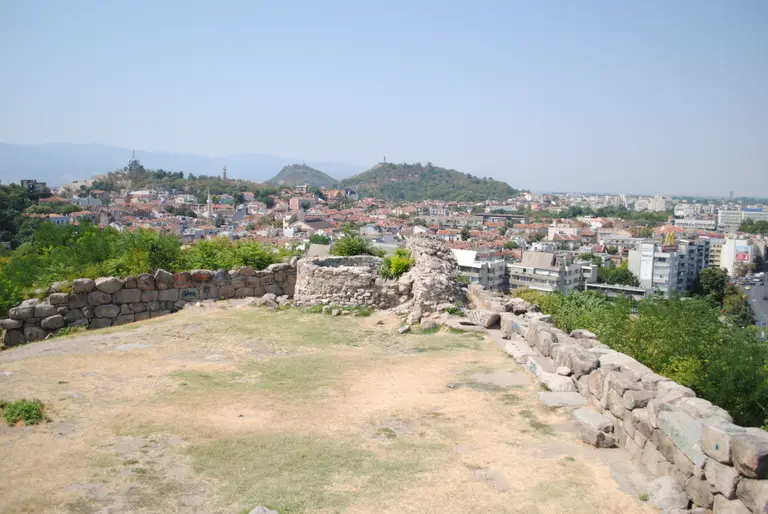
The oldest part of the city — here the Thracian settlement of Eumolpias was founded, later the acropolis of Philippopolis. Walls and towers survive from the 4th c. BC (cyclopean masonry), a 6th-c. Byzantine postern tunnel (under Justinian) and a large cistern. The site reopened to visitors in 2025 after restoration.

Thracian era – Antiquity Open

Kapana
Realsteel007 · CC BY-SA 4.0

Civic

Kapana

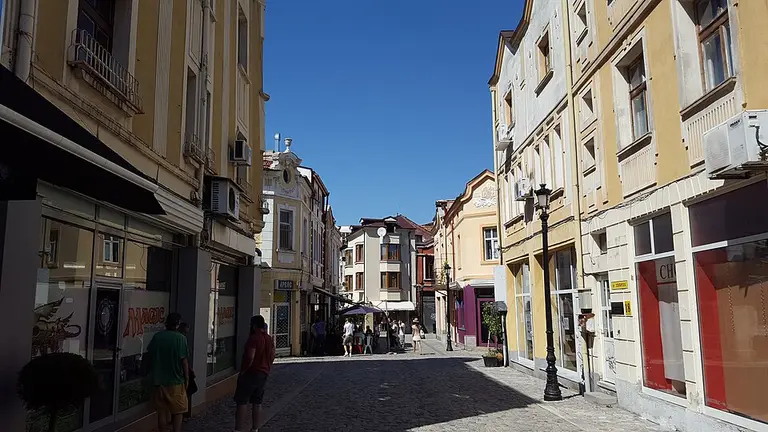
Kapana ("the Trap"), a quarter of narrow streets in central Plovdiv, today known as the city's creative and crafts district.

Modern period Open

Ancient Stadium
Kmrakmra · CC BY-SA 3.0

Roman

Ancient Stadium

One of the largest structures of Roman Philippopolis, built in the 2nd century under Emperor Hadrian and modelled on the stadium at Delphi. Around 240 metres long, it could hold up to 30,000 spectators for athletic games staged by the provincial assembly of Thrace — games the city's mint celebrated on its coins. Today only the northern curve, with 14 rows of seats, is exposed beneath Dzhumaya Square; the rest lies under the modern city.

Roman period, 2nd c. Open

Dzhumaya Mosque
Ivelin Vraykov · CC BY-SA 3.0

Ottoman

Dzhumaya Mosque

One of the oldest Ottoman mosques in the Balkans, dated to 1363–1364 (Sultan Murad I). It has nine domes and a single minaret and stands beside the Ancient Stadium.

Ottoman period, 14th c. Open